


WEEE Recycling for Businesses: The 15 UK Categories Explained
Electrical and electronic equipment is used by every business, from computers and phones to lighting equipment. When these products reach the end of their useful life, they may fall under the Waste Electrical and Electronic Equipment (WEEE) rules.
Understanding the WEEE categories UK businesses need to work with can make it easier to identify equipment correctly and arrange suitable disposal. But what exactly counts as WEEE, and which category does business IT equipment fall under?
This guide explains the 15 WEEE categories, with examples of the equipment.
What Counts as WEEE?
WEEE refers to any discarded item that relies on electricity, a battery, or a plug to operate.
For businesses, this can include everything from computers and printers to networking and security equipment.
Common examples include:
-
- Monitors
- Servers and networking equipment
- Mobile devices
- Printers and scanners
- Lighting equipment
- CCTV cameras
Knowing what counts as WEEE is the first step towards appropriate WEEE compliance.
What Are the 15 WEEE Categories?
The WEEE framework divides electrical and electronic equipment into 15 electronic waste categories.
-
-
-
- Large Household Appliances – refrigerators, washing machines, dishwashers and other large appliances.
- Small Household Appliances – Vacuum cleaners, irons, toasters, and coffee machines.
- IT and telecoms equipment – Computers, laptops, servers, printers, networking equipment, and other IT peripherals
- Consumer equipment – TVs, radios, cameras, speakers
- Lighting equipment – Lamps and other lighting equipment
- Electrical and electronic tools – Drills, saws, welding equipment
- Toys, leisure, and sporting equipment – electrically powered toys, games, and sporting equipment
- Medical devices – diagnostic and laboratory equipment
- Monitoring and control equipment – Smoke detectors and thermostats
- Automatic dispensers – hot/cold drink dispensers and cash machines
- Display units – digital screens and digital signage
- Appliances containing refrigerants – Commercial or specialised cooling units
- Gas discharge lamps and LED lights – fluorescent tubes and LED light bulbs
- Solar panels
- Vapes and electronic cigarettes
-
-
Which Category Does Business IT Equipment Fall Under?
For most businesses, computers and other technology will fall under the IT and telecommunications equipment category. This can include laptops, desktops, servers, printers, phones, and networking equipment.
Knowing which category business IT falls under is relevant for businesses replacing a device estate, carrying out an IT refresh, or clearing out old equipment. As being able to identify the equipment correctly helps businesses determine the appropriate recycling and disposal route.
Devices may also contain business or personal data, so considering secure handling and data destruction alongside commercial WEEE recycling is important.
Does All Electrical Equipment Count as WEEE?
Not every electrical product automatically counts as WEEE. Whether equipment falls within the WEEE framework depends on the type of product and whether any relevant exclusions apply.
This is why category classification and EEE classification is important when businesses are preparing equipment for disposal. Rather than treating every electrical item in the same way, businesses should identify what they have before arranging collection.
This is useful especially for businesses with a mixture of IT equipment, appliances, and lighting.
Business WEEE Recycling and IT Disposal
WEEE recycling for businesses can form part of a wider IT asset disposal process and support effective businesses electrical recycling.
A typical project may involve:
-
-
-
-
- Asset logging
- Categorising equipment
- Secure data destruction
- Reusing suitable equipment
- Responsible recycling
- Certification and reporting
-
-
-
Combining business WEEE recycling and IT asset disposal allows businesses to consider both the environmental side of disposal and the security of the information stored on their equipment.
IT Equipment Gigacycle Can Collect
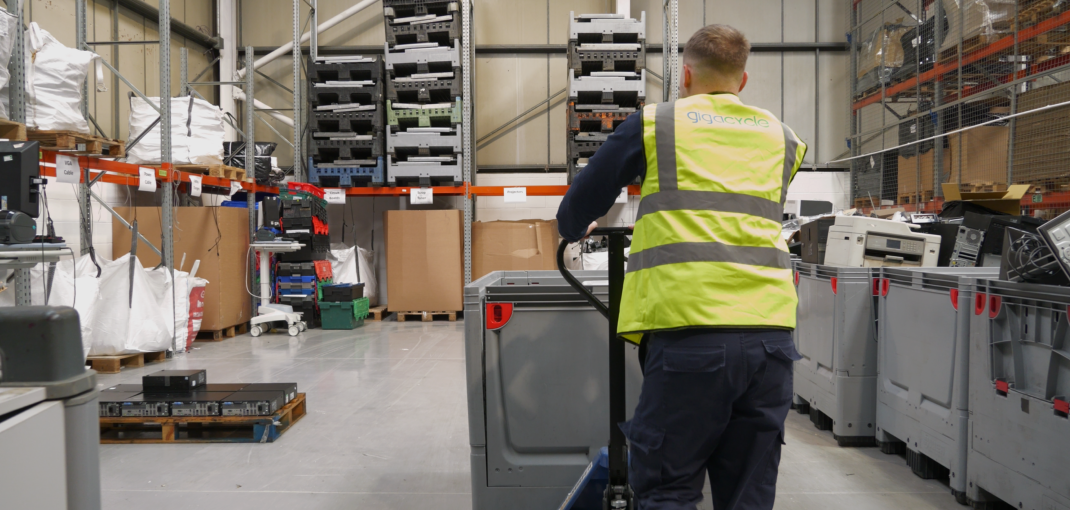
Businesses can generate WEEE from a wide range of equipment during office clearances, hardware refreshes, and equipment replacement projects. Knowing what needs to be removed and how it should be handled helps the planning of these projects run smoothly.
Common business IT collected includes:
-
-
-
-
- Laptops and desktops
- Servers
- Monitors
- Printers
- Networking equipment
-
-
-
A clear inventory makes the collection processes easier and helps ensure equipment, including items commonly handled through monitor recycling for businesses, is directed towards the appropriate route. Discover the full range of IT equipment Gigacycle can collect to help identify which items are suitable for collection.
WEEE Compliance and Secure IT Disposal
Correct classification is an important part of WEEE compliance, but businesses should also consider how their equipment is handled throughout the disposal process.
For IT equipment containing business or personal information, secure disposal should be considered alongside environmental requirements. Businesses should also make sure they understand relevant secure IT disposal regulations and maintain appropriate records.
Choosing a provider that also specialises in UK electrical recycling services can help businesses manage redundant equipment in line with environmental and data security requirements.
Conclusion
Understanding the WEEE categories can help businesses identify electrical equipment correctly, apply the appropriate classification and choose the most suitable disposal route.
For businesses handling redundant IT and electrical equipment, the process should go beyond simple disposal. By considering data security, reuse opportunities, compliance requirements and businesses electrical recycling, businesses can help ensure unwanted equipment is managed responsibly and sustainably.