


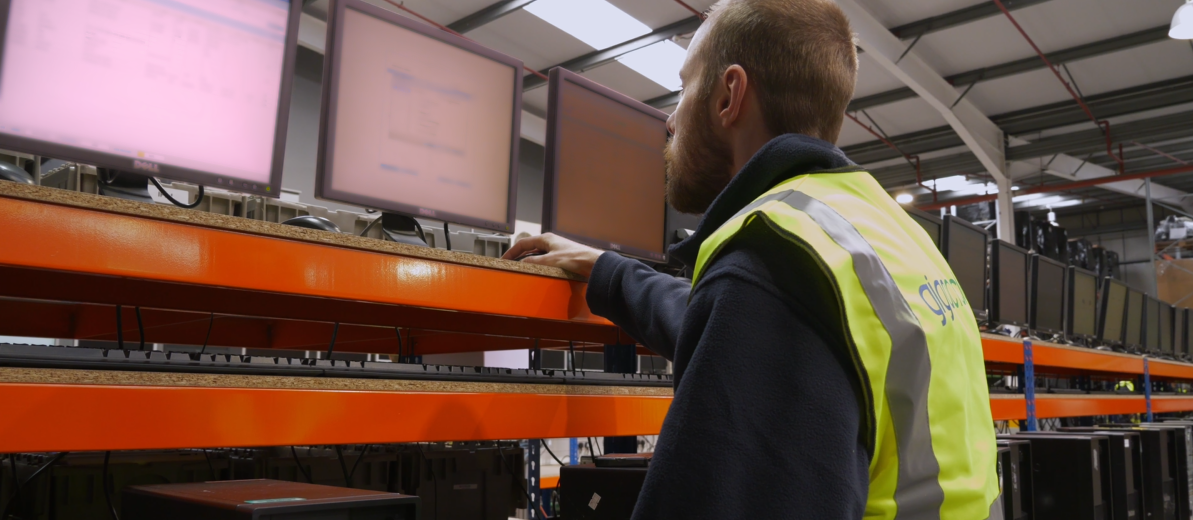
What Happens to Old Computers After They Are Recycled?
When a computer reaches the end of its useful life, putting it in a recycling collection is only the start. Old computers can contain valuable components and materials, but they may also contain sensitive business information that needs to be handled securely.
So, what happens to old computers after recycling? Depending on their condition, they may be reused, refurbished, dismantled for parts or processed for material recovery. This guide explains the computer recycling process, from the initial collection though to the outcome.
Where Do Old Computers Go?
After collection, old computers are typically taken to a suitable recycling facility where they can be assessed and processed.
For businesses, this can form part of a wider IT asset disposal project. Rather than immediately breaking down every device, equipment can first be assessed to determine whether it still has useful value.
This helps to decide if a computer is suitable for:
- Hardware reuse
- Refurbishment
- Parts harvesting
- Material recycling
The aim is to make sure equipment follows the most appropriate route rather than treating every computer as waste.
The Computer Recycling Process
The computer recycling process can vary depending on the equipment, its condition, and the recycling provider, but it starts by collecting old computers and assessing if they are suitable for reuse or resale.
The process includes:
- Collection of the equipment
- Asset triage
- Data sanitisation
- Testing and refurbishment
- Reuse or remarketing
- Component recovery
- Material recycling
Asset Triage: What Happens First?
One of the first stages of the IT recycling process is asset triage. This involves evaluating equipment to determine its next steps.
During triage, equipment can be assessed for:
- Hardware functionality
- Cosmetic and physical condition
- Age
- Potential for refurbishment
- Reuse or resale potential
This helps determine whether a device should continue through a reuse route or move towards recycling.
What Happens to Data on Recycled Computers?
Computers can contain business information, personal data, customer records, and other sensitive files. Simply sending a device to a recycling facility does not automatically make the information stored on it secure.
As part of the secure IT asset disposal process, data-bearing devices should be processed through an appropriate data sanitisation method before being reused, resold, or dismantled.
For businesses, secure data handling is an important part of responsible computer recycling.
Are Old Computers Refurbished or Broken Down?
A common question is whether old computers are simply broken down for materials.
However not every old computer follows the same route. If a computer is in suitable condition, refurbishment can give it another useful life.
Refurbishment may involve:
- Testing the hardware
- Cleaning the device
- Replacing faulty components
- Data destruction
- Upgrades
- New software
Devices that are no longer suitable for reuse can instead be dismantled so that useful components and materials can be recovered.
This approach supports hardware reuse and helps keep functioning technology in circulation for longer.
IT Asset Remarketing and Refurbishment
When equipment retains value, IT asset remarketing and refurbishment can be an important part of the recycling process.
Instead of sending a working computer straight for material recycling, suitable equipment can be refurbished and prepared for another user.
This can provide multiple benefits:
- Extends the life of equipment
- Recovers residual value
- Supports a more circular approach to IT
For businesses, this can also contribute to IT asset value recovery, allowing redundant equipment to retain value after it has been removed.
Which Computer Components Can Be Recycled?
Computers contain a mixture materials and components that can be recovered during processing.
These components can include:
- Circuit boards
- Processors
- Hard Drives & SSDs
- Graphic cards
- Computer case
- Cables
This process is known as component recovery and can help reduce the number of materials that need to be disposed of.
Parts Harvesting and Component Recovery
Parts harvesting involves recovering usable components from equipment that cannot be refurbished as a complete device.
Such as a working component may be suitable for another machine or have value within the secondary market.
This allows more of the original equipment to be recovered and supports circular IT.
What Happens to Recycled Electronics?
Equipment that cannot be reused or refurbished can move into e-waste processing. Devices are dismantled and separated so that materials can be recovered.
This can include:
- Metals
- Plastics
- Glass
- Circuit boards
- Other recoverable materials
Through material recycling, these resources can be processed for use rather than simply being discarded.
How to Dispose of Old Computers
The best approach to disposing old computers is to consider the entire lifecycle rather than just arranging a waste collection.
The process should consider:
- Identifying the equipment – What is being removed and its condition
- Protecting the data – Ensure data bearing equipment goes through data sanitisation
- Assessing for reuse – Determine whether the computer can be refurbished or reused
- Recovering value – Identify equipment and components with resale value
- Recycling responsibly – Equipment that cannot be reused should be sent through responsible recycling
Using this process will help businesses make better use of their redundant technology.
Conclusion
Depending on its condition, an old computer can become a refurbished computer, provide components for another machine, or be broken down for material recovery.
Computer recycling is about more than simply disposing of unwanted hardware. Through triage, data sanitisation, refurbishment, component recovery and material recycling, different parts of the equipment can be given the most appropriate next step.
For businesses, this approach can support circular IT, improve IT asset value recovery, and ensure redundant equipment is handled through a structured disposal process.