


Laptop Recycling vs Trade-In: Which Option Is Better for Business Devices?
When laptops get replaced, the old laptops don’t necessarily need to go straight to recycling. Depending on their age, condition and specification, some may still have resale value. This creates an important decision for businesses: should you choose laptop recycling vs trade-in?
Some laptops may be suitable for refurbishment and resale, while others may be too old and damaged. Understanding the difference between recycling and trade-in can help businesses make better decisions about their redundant IT equipment.
Laptop Recycling vs Trade-In: What’s the Difference?
Business laptop recycling focuses on recovering materials from devices that are no longer suitable for reuse. Components and materials can be separated and processed through appropriate WEEE recycling channels.
A laptop trade-in for companies, however, focuses on recovering the remaining value of equipment that can potentially be reused or resold. This is often the preferred option for businesses looking to recycle or resell old laptops.
In simple terms:
- Trade-in: The laptop is assessed for potential resale or reuse
- Refurbishment: Suitable devices are tested, repaired and prepared for another user.
- Resale: Devices with remaining market value are sold through appropriate channels
- Recycling: Equipment that cannot be reused is processed through material recovery
For businesses, the decision should be based on the condition and value of the equipment rather than automatically choosing one route for all devices.
Should a Business Recycle or Trade-In Old Laptops?
The first step is assessing the old laptops.
Businesses should consider:
- The age of the laptop
- The processor and specifications
- Physical condition
- Battery health
- Whether the device is fully functional
- Current market demand
- Potential residual value
A newer business laptop in good condition may have significant resale potential. An older device with a damaged screen or failing components may be more suitable for recycling.
Assessing old laptops can help businesses avoid sending valuable equipment for recycling.
Which Business Laptops Still Have Resale Value?
Not every laptop will have the same resale potential.
Generally, business laptops that have modern specifications, are in good physical condition and have reliable performance are more likely to retain residual value.
Laptops that may be suitable for hardware resale often have:
- Modern processors
- Sufficient RAM
- SSD storage
- Good battery health
- Minimal cosmetic damage
- Working screens, keyboards and ports
Some business laptops can still be in demand after they’ve been retired, especially among buyers looking for more affordable technology.
As a result, businesses should consider IT asset remarketing before recycling equipment that still has useful life remaining.
The Importance of Device Condition Grading
Before a laptop can be resold, its condition needs to be assessed. Device condition grading helps determine how equipment should be marketed and what it may be worth.
A grading process may consider:
- Screen condition
- Scratches and dents
- Keyboard wear
- Battery condition
- Overall functionality
- Cosmetic appearance
A laptop in excellent condition may have a higher resale value, while heavily worn equipment may have a lower value.
Accurate grading also helps create transparency for buyers and supports more realistic expectations when equipment enters the secondary market.
How Is Company Data Removed Before Laptops Are Resold?
One of the biggest concerns when businesses sell used business laptops is what happens to the data stored on them.
Simply deleting files or resetting a laptop isn’t necessarily enough to guarantee that information cannot be recovered. Businesses should use an appropriate secure data erasure process before devices are resold or reused.
A secure process should ensure that data is removed from the device before it reaches another user.
Depending on the business’s requirements, the process may include:
- Secure data erasure
- Verification of the erasure process
- Asset identification
- Providing appropriate documentation
This is a crucial part of IT asset remarketing and resale because it allows businesses to recover value from their equipment without compromising sensitive company information.
Refurbishment Before Resale
Some laptops require more work before they are ready for another user.
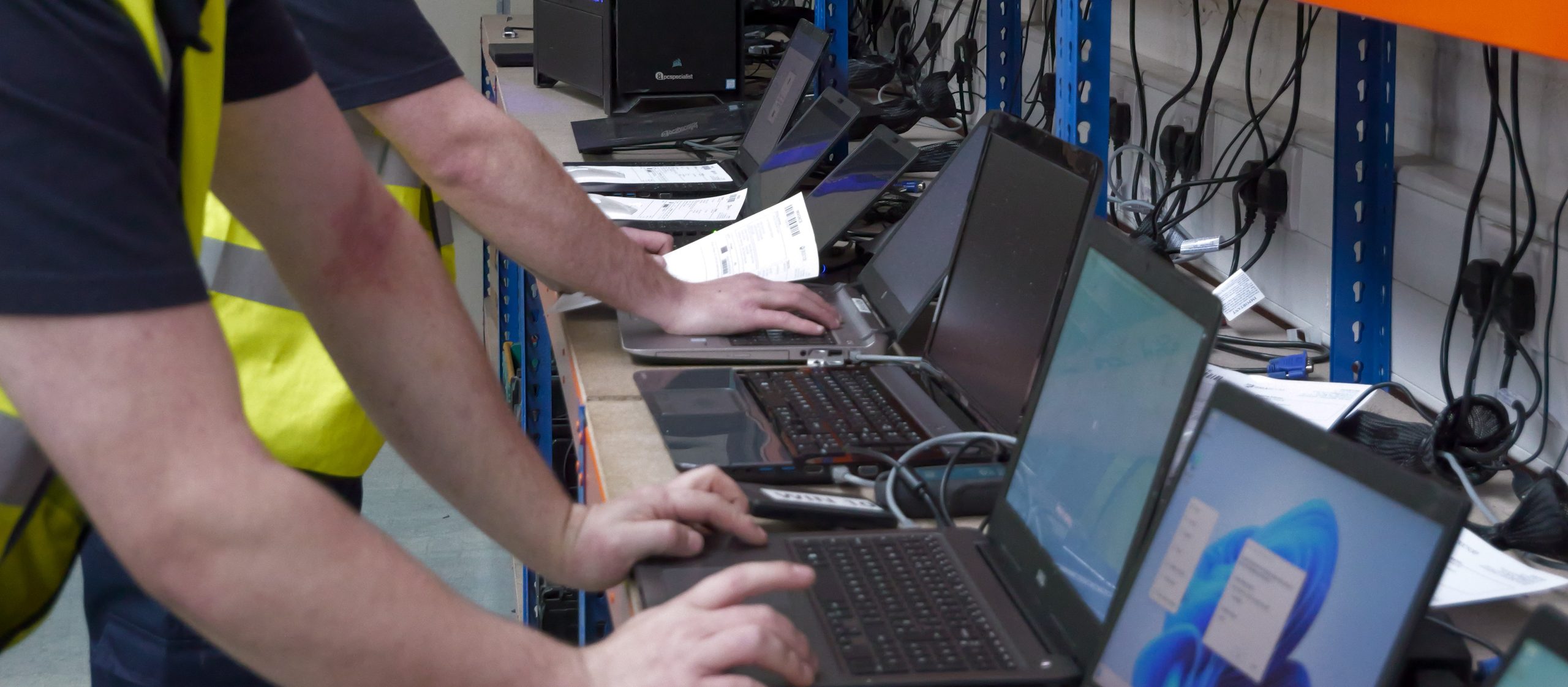
Device refurbishment may involve testing, cleaning, repairs and replacing components where necessary. This can help extend the useful life of equipment that would otherwise be considered redundant.
Through refurbishment, businesses can give suitable devices a second life rather than immediately sending them for recycling.
Refurbished devices can then enter a used laptop resale channel or be made available to businesses looking to buy refurbished laptops as a cost-effective alternative to purchasing new equipment.
When Is Laptop Recycling the Better Option?
While resale can be a valuable option, not every laptop is suitable for remarketing.
Laptop recycling may be more appropriate when laptops are:
- Too old to meet current performance requirements
- Physically damaged
- Beyond repair
- Missing essential components
In these cases, responsible corporate laptop recycling and WEEE recycling allows materials and components to be recovered rather than sending equipment to landfill.
This makes recycling an important part of a sustainable IT lifecycle, particularly for equipment that has genuinely reached the end of its useful life.
Maximising the Value of Redundant IT Equipment
The best approach is not always to choose between recycling and trade-in. Instead, businesses should assess their entire IT estate and determine the most appropriate route for each device.
Such as:
| High Value Devices | Lower Value but Functional Devices | End-of-Life or Damaged Devices |
| Secure data erasure | Secure data erasure | Secure data handling |
| Refurbishment | Potential reuse or lower value resale | WEEE recycling |
| IT asset remarketing | Material recovery | |
| Resale |
This approach supports maximising the value of redundant IT equipment by ensuring that each device follows the most appropriate route.
How to Dispose of Business Laptops Securely
Businesses should consider both data protection and environmental responsibilities when disposing of retired laptops. Whether devices are being resold or sent for secure business laptop recycling, a secure disposal process should include:
- Asset auditing and tracking
- Secure collection and transportation
- Certified data destruction
- Remarketing
- WEEE compliant laptop recycling
- Full documentation and reporting
This approach allows businesses to maintain control over their assets while ensuring that sensitive information is properly managed.
For more information read our article on how to dispose of business laptops securely.
Is Trade-In Always Better Than Recycling?
Not necessarily.
The best option depends on the individual device and the business’s priorities.
Trade-in and resale can help businesses recover residual value from suitable equipment, while recycling provides an appropriate solution for devices that have reached the end of their useful life.
The key is to avoid treating every laptop in the same way.
Conclusion
When comparing laptop recycling vs trade-in, the best choice depends on the condition, age and remaining value of the devices.
Laptops that are still functional and have market demand may be suitable for secure data erasure, refurbishment and resale, helping businesses recover value from redundant IT equipment. Devices that are damaged or no longer functional may be better suited to responsible WEEE recycling.
By assessing each device individually and using a secure, documented process, businesses can protect company data, support sustainability and make the most of their retired laptops.